
Last Updated: October 29, 2026
Quick Summary
Fiji snorkelling tours for older travellers suit people who want reef views without heavy physical demands, because warm shallow lagoons, calm water inside the reef and short boat transfers keep the pace relaxed. Choose a shaded, mid-sized boat with a toilet, a swim platform or ladder, and a guide in the water. Non-swimmers can still enjoy glass-bottom boats or sandbar stops.
- Warm, shallow lagoons, calm water and short boat transfers make Fiji reefs accessible for many people over 50.
- A half-day trip with one or two snorkel stops is often more enjoyable than a packed full day.
- Ask for an in-water guide ratio, typically one guide per eight to ten guests, before booking.
- Check the boat entry point, such as step height and ladder handrails, by requesting a photo or video.
- Choose a shaded, mid-sized vessel with a toilet over a cheaper, faster small boat.
Table of Contents
- Why Fiji Snorkelling Suits Older Travellers
- What Makes a Fiji Snorkelling Tour Comfortable at 50 and Beyond
- Fiji Snorkelling Tours for Non-Swimmers and Low-Exertion Travellers
- Fiji Snorkelling Day Trips Compared: Cruises, Boats and Resort Tours
- Accessible Snorkelling Tours in Fiji: Mobility, Transfers and Boat Access
- Combining Snorkelling with Village Visits and Cultural Tours
- Booking Your Fiji Snorkelling Tour: What to Confirm Before You Pay
- Frequently Asked Questions
Why Fiji Snorkelling Suits Older Travellers
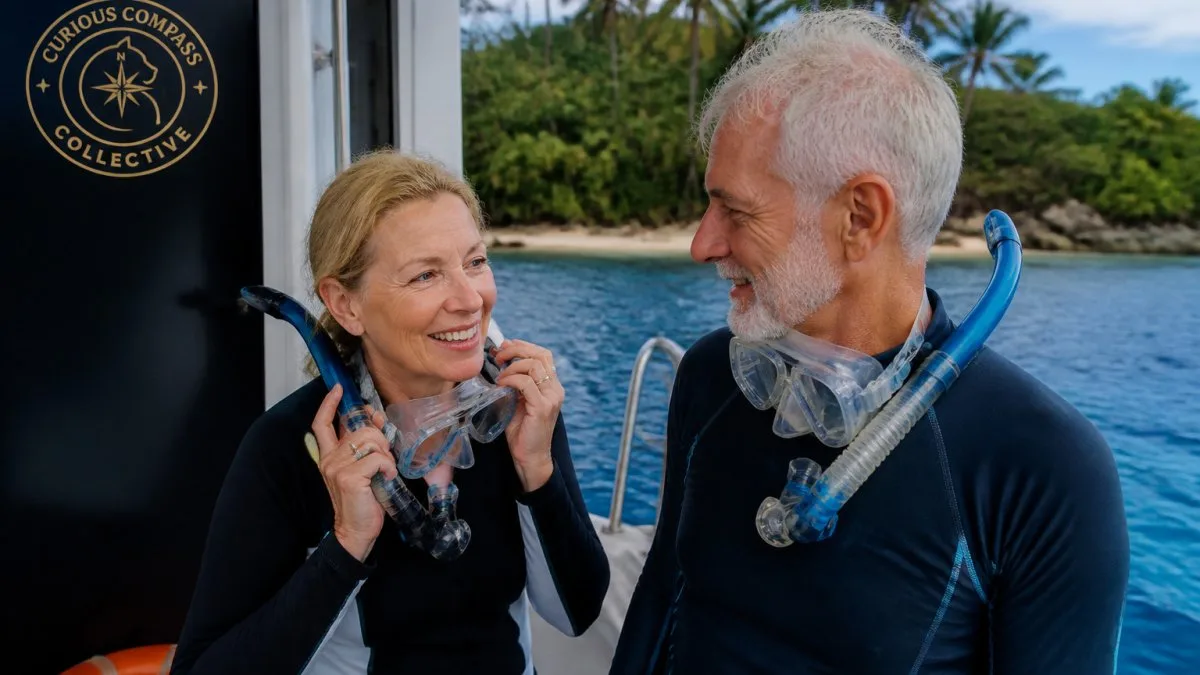
Fiji snorkelling tours for older travellers are one of the easier ways to enjoy the reef without heavy physical demands. Warm, shallow lagoons, calm water inside the reef and short boat transfers make the experience accessible for many people over 50. Tours in the Pacific can be paced for mature travellers, so the pace suits a relaxed holiday rather than a physical challenge.
Many older travellers find that the appeal is less about swimming distance and more about seeing marine life up close from a comfortable base. The right choice depends on mobility, confidence in the water and how much rest you want between activities.
What Makes a Fiji Snorkelling Tour Comfortable at 50 and Beyond
Comfort on a snorkelling tour usually comes down to four things: boat design, the length of the day, the number of stops and the guide's approach. A tour with a low step onto the boat, shade on deck and regular breaks will feel very different from a long, fast-moving day with multiple water stops.
Many travellers find that a half-day trip with one or two snorkel stops is more enjoyable than a full day packed with activities. Ask how many stops are planned and how long each one lasts before you book.
Fiji Snorkelling Tours for Non-Swimmers and Low-Exertion Travellers
You do not need to be a confident swimmer to see Fiji's reefs, but the quality of a non-swimmer experience depends on specifics that are rarely advertised. Ask operators these questions before booking, and treat the answers as part of your decision rather than an afterthought.
Flotation and supervision. Most operators provide buoyancy vests or snorkel vests, but the fit and buoyancy differ. A snorkel vest keeps you face-down and floating; a life jacket holds you higher and is easier for nervous swimmers. Confirm which is supplied, whether it is sized for adults, and whether a guide is in the water with the group rather than watching from the boat. A common pattern is one in-water guide per eight to ten guests; ask for the ratio.
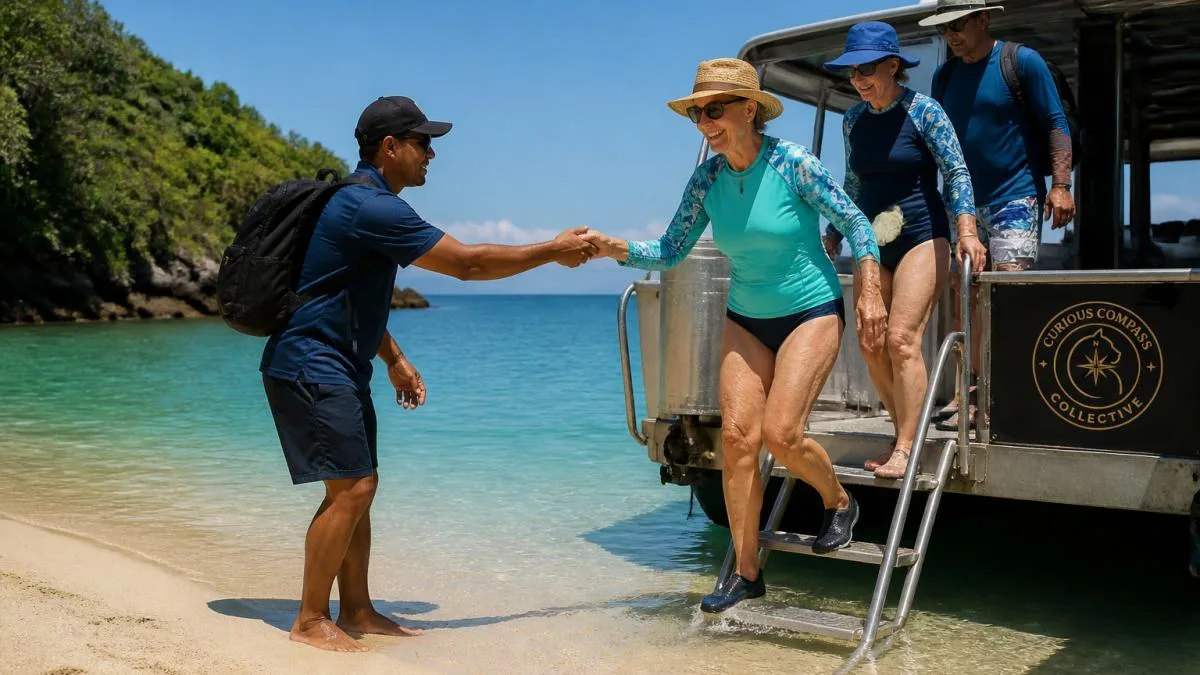
Water entry and exit. The easiest entries are from a swim platform or a ladder with handrails into calm lagoon water. Harder entries are a seated roll off the side of a small boat or a stride entry from a high deck. Ask about step height, ladder rungs, and whether crew assist guests in and out. For low-exertion travellers, a beach entry from a resort or a sandbar is often the gentlest option because you can walk in to waist depth.
Currents and conditions. Inside the reef, lagoons are usually calm, but tidal flow can still push you. Ask whether the operator snorkels on the sheltered side of the reef, whether a tender or guide stays close, and what the policy is if conditions turn. A reputable operator will cancel or relocate rather than push a marginal day.
Sun and heat. Even a short session exposes you to strong tropical sun. A rash vest, reef-safe sunscreen, a wide-brim hat and shade on deck matter more than most brochures suggest. Plan the water session for the cooler morning and keep the afternoon light.
Health checks. If you have heart or respiratory conditions, uncontrolled blood pressure, recent surgery, or you take medication that affects balance or sun sensitivity, speak to your clinician before snorkelling. This is general guidance, not medical advice.
Non-swimmer alternatives. If you would rather stay dry or barely wet, these options still deliver marine life:
- Glass-bottom boats, seated viewing over the reef, no water entry, good for limited mobility.
- Semi-submersible or underwater-viewing vessels, enclosed viewing with seats and shade.
- Reef-edge and sandbar stops, stand or wade in shallow water while a guide points out coral and fish.
- Resort-based snorkel sessions, short, supervised, with an easy return to your room and shade.
- Guided lagoon cruises with a naturalist, commentary and sightseeing rather than swimming.
Fiji Snorkelling Day Trips Compared: Cruises, Boats and Resort Tours
Formats differ far more in comfort and logistics than in the reef you see. Use the comparison below to judge practical suitability, then confirm the specifics with the operator. You can also browse small group Fiji tours to see one operator's itinerary and inclusions.
| Format | Typical group size | Time on water | Shade and toilets | Meal | Best for | Watch out for |
|---|---|---|---|---|---|---|
| Large cruise day trip | 60-150+ | 4-6 hours | Shaded decks, toilets on board | Usually included | A full day out with facilities | Crowded snorkel stops, fixed schedule |
| Small boat tour | 8-20 | 2-4 hours | Limited shade, often no toilet | Sometimes | Quieter, flexible pacing | High side or ladder entry; ask about access |
| Resort snorkelling | Independent | As long as you like | Resort facilities nearby | Not applicable | Easy return to your room, rest breaks | Reef quality varies by location |
| Glass-bottom boat | 15-40 | 1-2 hours | Seated, shaded | Rarely | Non-swimmers and limited mobility | Less close contact with the water |
| Private charter | Your group | Flexible | Depends on vessel | By arrangement | Tailored pace and accessibility | Highest cost per person |
Group size and pacing. A smaller group usually means more guide attention and a slower pace, but small boats often lack toilets and shade. Large cruises have facilities but herd guests through snorkel stops on a timetable. For older travellers, the sweet spot is often a mid-sized vessel with shade, a toilet, and a guide who stays in the water.
Boat type and access. Catamarans are more stable and usually have swim platforms and ladders; rigid inflatables are faster but harder to board and offer little shade. Ask about step height, handrails, and whether crew assist with entry and exit.
Inclusions and extras. Confirm in writing whether the price covers transfers, equipment, flotation aids, lunch, drinking water, reef-safe sunscreen and marine-park fees.
Indicative pricing. Published fares vary by operator, season, departure point and whether lunch and transfers are included. Rather than rely on outdated figures, request a current quote in AUD and ask what is excluded. Prices are typically higher in the peak dry-season months and for private departures.
Cancellation and weather. Ask how weather cancellations are handled, whether you receive a refund or credit, and how much notice is given. Sea conditions can change quickly, and a good operator will reschedule rather than run a marginal trip.
Seasonality and sea conditions. Visibility and comfort vary through the year. The drier, cooler months generally bring calmer seas and clearer water, while the wet season can mean choppier conditions, runoff and reduced visibility. Tidal state also affects currents and the ease of a lagoon snorkel. Build a buffer day into your itinerary so a poor-weather day can be swapped rather than lost.
Best for: travellers who want a shaded boat with a guide and one or two snorkel stops. Skip if: you prefer long swimming sessions or a packed itinerary of activities.
Accessible Snorkelling Tours in Fiji: Mobility, Transfers and Boat Access
Mobility affects which tours will work well. Ask about step height on the boat, whether there is a ladder or swim platform and how far you must walk from transport to the jetty. Some boats have sheltered seating and a low deck, which helps guests with knee or hip issues.
Transfers matter as much as the activity itself. A short transfer by a reliable vehicle is easier than a long road trip followed by a steep walk to the boat. Confirm pick-up times, whether the vehicle has air conditioning and whether a driver can assist with luggage.
Watch out: a boat that looks accessible from the shore may have a high side or a narrow gangway. Ask the operator for photos or a description before you commit.
Combining Snorkelling with Village Visits and Cultural Tours
Many older travellers enjoy pairing a snorkelling morning with a village visit or cultural experience in the afternoon. This adds a gentler, more social dimension to the day. Village visits typically involve a welcome ceremony, a walk through the village and time to talk with local residents.
Look for tours that treat village visits as a respectful exchange rather than a staged performance. Plan for a rest between activities, especially in the heat of the day.
Booking Your Fiji Snorkelling Tour: What to Confirm Before You Pay
Before paying, confirm the following in writing: the start and finish times, what is included (transfers, equipment, lunch, flotation aids), the number of guests per boat and the guide's qualifications for water safety. Ask whether there is a cancellation policy and how weather changes are handled.
Check reviews from travellers in your age group and look for specifics about comfort and pacing. If a provider is vague about accessibility, that is worth noting. You can find current tour options and itineraries on the Curious Compass Collective website, and request a quote before making a decision.
Frequently Asked Questions
Which Fiji snorkelling tours are suitable for older travellers?
Look for tours that describe their pace, boat access and snorkelling depth rather than only listing activities. Small-group or shared-boat day trips with a calm lagoon, a short boat transfer and a guide who checks in on each guest usually suit older travellers best. Tours with long rafting, trekking or multi-stop itineraries are better for active travellers. Ask the operator how many hours are spent in the water, whether there is a shaded area on the boat, and how guests get on and off, then compare those answers across your shortlist before paying.
Can you snorkel in Fiji if you are not a strong swimmer?
Yes, many Fiji snorkelling trips allow non-swimmers to float with a flotation vest or life jacket while staying close to the boat or reef edge. Confirm before booking that the operator provides a flotation device in your size, that a guide stays in the water with non-swimmers, and that the reef section is shallow enough to stand in. If you are not comfortable floating face-down, ask about glass-bottom boat or reef-viewing alternatives that let you see the marine life without entering the water.
What should older travellers check before booking a Fiji boat tour?
Check the pacing, the number of guests on the boat, the water time, the shade and toilet facilities, and whether lunch and transfers are included. Ask about health considerations such as sun exposure and seasickness, and whether the crew is trained in water safety and first aid. Confirm the total cost in AUD, including any transfer, park or tip charges, because quoted prices in other currencies can change at the time of payment. Pricing depends on dates, group size and inclusions, so request a current written quote directly from Curious Compass Collective.
Ready to plan a gentler Fiji snorkelling experience? Curious Compass Collective designs small-group and private tours with thoughtful pacing for mature travellers, so you can enjoy the reef at a comfortable speed.

Frequently asked questions
Which Fiji snorkelling tours are suitable for older travellers?
Look for tours that describe their pace, boat access and snorkelling depth rather than only listing activities. Small-group or shared-boat day trips with a calm lagoon, a short boat transfer and a guide who checks in on each guest usually suit older travellers best. Tours with long rafting, trekking or multi-stop itineraries are better for active travellers. Ask the operator how many hours are spent in the water, whether there is a shaded area on the boat, and how guests get on and off, then compare those answers across your shortlist before paying.
Can you snorkel in Fiji if you are not a strong swimmer?
Yes, many Fiji snorkelling trips allow non-swimmers to float with a flotation vest or life jacket while staying close to the boat or reef edge. Confirm before booking that the operator provides a flotation device in your size, that a guide stays in the water with non-swimmers, and that the reef section is shallow enough to stand in. If you are not comfortable floating face-down, ask about glass-bottom boat or reef-viewing alternatives that let you see the marine life without entering the water.
What should older travellers check before booking a Fiji boat tour?
Check the pacing, the number of guests on the boat, the water time, the shade and toilet facilities, and whether lunch and transfers are included. Ask about health considerations such as sun exposure and seasickness, and whether the crew is trained in water safety and first aid. Confirm the total cost in AUD, including any transfer, park or tip charges, because quoted prices in other currencies can change at the time of payment. Pricing depends on dates, group size and inclusions, so request a current written quote directly from Curious Compass Collective.