
Last Updated: October 25, 2026
Quick Summary
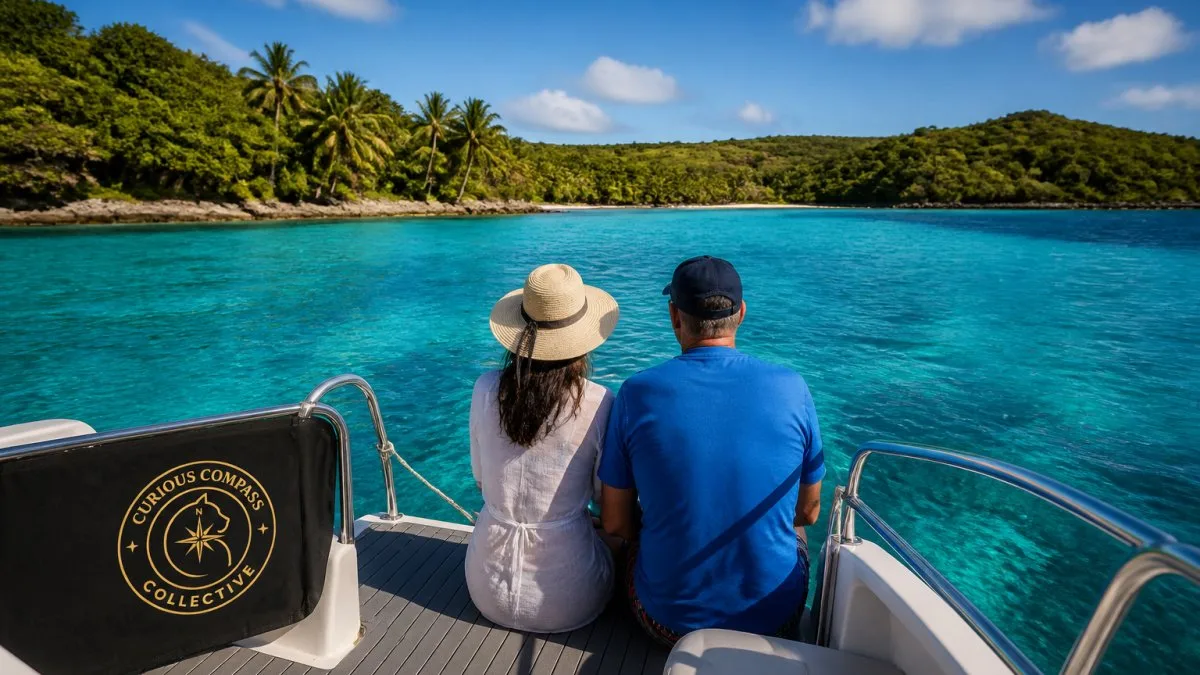
A Blue Lagoon tour is a small-ship cruise through Fiji's Yasawa and Mamanuca Islands, built around swimming, snorkelling and island stops rather than nightlife or onboard entertainment. Ships carry a maximum of 44 to 64 guests with a 1:3 crew-to-guest ratio, and the itinerary decides which lagoons you actually see. Short Mamanuca loops deliver more landings per day, while seven-night Yasawa routes reach the caves and emptier northern beaches.
- Short Mamanuca loops deliver more landings per day than longer Yasawa routes.
- The seven-night Escape to Paradise itinerary strings together village tours, cave entries and reef snorkelling.
- Cabins are compact and functional rather than luxurious on these small ships.
- Compare fares per night and ask for a written inclusion and exclusion list.
- Book early, because short voyages often sell out first and cabin choice narrows.
Table of Contents
- What a Fiji Blue Lagoon Tour Actually Delivers
- Blue Lagoon Cruise Itinerary: Routes Through the Yasawa and Mamanuca Islands
- The Three-Night Yasawa Island Cruise Compared With Longer Voyages
- Blue Lagoon Cruise Activities: Snorkelling, Caves and Island Exploration
- Cabins, Crew and the Small-Ship Experience Onboard
- What a Blue Lagoon Cruise Review Reveals About Costs and Value
- Matching a Blue Lagoon Tour to Your Travel Style
- Planning a Small-Group Pacific Escape With Curious Compass Collective
- Frequently Asked Questions
What a Fiji Blue Lagoon Tour Actually Delivers
A Fiji blue lagoon tour is a small-ship cruise through the Yasawa and Mamanuca Islands, built around swimming, snorkelling and island stops rather than nightlife or onboard entertainment.
Here is the reality most brochures skip. You are not sailing to one blue lagoon. You are sailing past a series of them, and the itinerary decides which ones you actually see.
At Curious Compass Collective, we plan Pacific trips for travellers who want scenery without the crowd crush, so we read the operator's own documents closely rather than the marketing copy. The Blue Lagoon Cruises 2026-27 brochure sets out the fleet plainly: two ships with 32 and 22 cabins, carrying a maximum of 64 and 44 guests, with a crew-to-guest ratio of 1:3.
Below, we break down routes, durations, cabins, costs and who each voyage actually suits, so you can judge whether the cruise earns its place in your plans.
Blue Lagoon Cruise Itinerary: Routes Through the Yasawa and Mamanuca Islands
Routes split into two families, and the split is the single most useful thing to understand before you book. Short voyages stay in the Mamanuca Islands, close to the mainland and easy to reach. Longer voyages push north into the Yasawa chain, where the water clears, the beaches empty out and the distances grow.
The Yasawa group is a line of volcanic islands running north from the Mamanucas. Cruises that reach the northern Yasawas trade convenience for isolation: fewer boats, longer sailing legs, and shore stops that feel genuinely removed from resort Fiji. The Mamanucas suit travellers who want the postcard scenery without long transfers.
What the short Mamanuca routes actually cover
A three- or four-night departure typically works a loop within the Mamanucas, with the operator's own brochure describing stops built around swimming, snorkelling and a beach day rather than long passages. Expect one or two anchorages a day, a mix of reef snorkelling and a sand cay landing, and at least one village or cultural stop. The appeal is density: you are never more than a short sail from the next landing, so the ratio of time ashore to time underway stays high.
What the longer Yasawa routes add
Once the ship turns north, the itinerary changes character. The northern Yasawas are where the limestone scenery, the cave systems and the emptier beaches sit, and the operator's seven-night Escape to Paradise itinerary is the clearest example: it strings together village tours, cave entries and reef snorkelling across a week rather than a weekend. The trade-off is real.
A few practical points shape every itinerary:
- Sailing time is not sightseeing time. Longer routes mean more hours underway and fewer landings per day.
- Northern routes reward patience. The scenery improves as you go north, but so does the time between stops.
- Shore excursions vary by departure. Confirm which village visits and cave entries are included before you commit.
- Weather can rewrite the plan. Operators reserve the right to swap anchorages for sea conditions, so treat any published itinerary as a guide rather than a contract.
The Tripadvisor listing for the seven-night Escape to Paradise itinerary describes village tours sitting alongside the outdoor activities, which tells you the longer voyages lean cultural as well as scenic. That mix is where a well-planned cruise outperforms a resort stay.
The Three-Night Yasawa Island Cruise Compared With Longer Voyages
Duration is the decision that changes everything else. A three-night voyage gives you a taste: a couple of island stops, one or two snorkelling sessions, and a fast introduction to shipboard routine.
Four-night and seven-night voyages are where the cruise finds its rhythm. The four-night Wanderer itinerary, listed through Pleasant Holidays, adds a stop or two without demanding a full week away.
| Voyage length | Best for | Trade-off |
|---|---|---|
| 3 nights | First-timers, short breaks | Few stops, rushed pace |
| 4 nights | Testing the waters | Moderate coverage |
| 7 nights | Full immersion, mature travellers | More time committed |
Our view: if you have travelled a long way to get there, three nights undersells the region. The extra days are where the trip stops feeling like a sampler.
Blue Lagoon Cruise Activities: Snorkelling, Caves and Island Exploration
Days revolve around water and shore. Snorkelling tops most guests' lists, and the Yasawa reefs reward it, with clear lagoon water and easy entries from the tender boats.
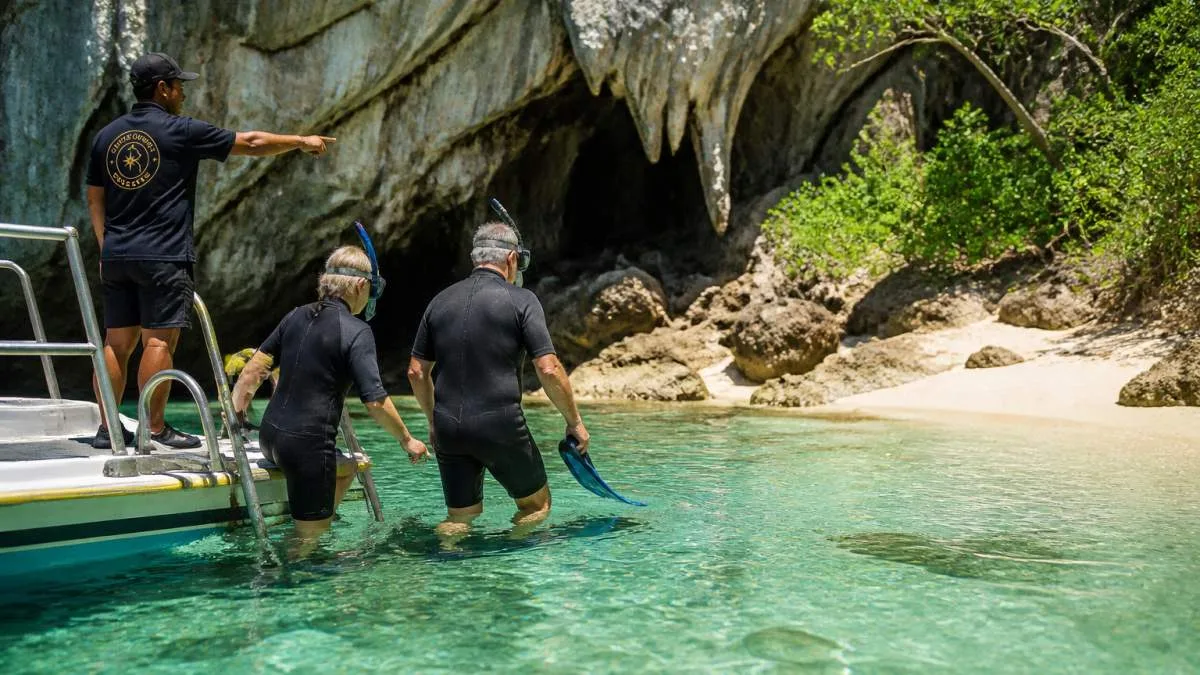
The limestone caves are the standout. Village visits add the cultural layer, and the Tripadvisor review of a seven-night voyage mentions daily snorkelling, swimming and scenic cruising alongside those stops, which matches how the days are structured.
For travellers who want more cultural depth at each stop, our guide to Pacific Island cultural experiences covers what to look for beyond the standard tour circuit.
What most guides miss: the quality of a shore stop depends heavily on the guide. A good one reads the tide, times the cave entry and knows which village welcomes visitors that day.
Cabins, Crew and the Small-Ship Experience Onboard
Cabins are compact and functional rather than luxurious.
The 1:3 crew ratio from the operator's brochure is the number to hold onto. On a large vessel that figure would be generous. On a small ship it means real attention, help with gear, and shore landings that do not turn into a queue.
Mature travellers tend to thrive on this format. If you are weighing onboard comfort against a longer Pacific trip, our guide to luxury Pacific travel for mature travellers sets out what to expect from pacing and service.
Watch out: short voyages often sell out first, and cabin choice narrows quickly. Book early if you want a specific deck or a window cabin.
What a Blue Lagoon Cruise Review Reveals About Costs and Value
Here is where most guides go quiet: published fares for this cruise are hard to pin down in Australian dollars, because listings quote in other currencies or leave the fare blank entirely. Rather than print a number that will be wrong by the time you read it, this section gives you the cost mechanics so you can build your own total and interrogate any quote you are given.
Build the total, not the headline
The fare is only one line. A realistic total for a blue lagoon cruise has five parts:
- The cruise fare itself, usually quoted per person on a share-twin basis. Solo travellers should ask explicitly about the single supplement, because small ships have few single cabins and the supplement can be substantial.
- Taxes, port fees and levies, which are sometimes bundled into the quoted fare and sometimes added at checkout. Ask which.
- Transfers, from the airport or your hotel to the departure point. These are frequently an extra, and on a small ship the transfer is often a scheduled coach or boat rather than a private car.
- Onboard extras, such as drinks outside meal service, Wi-Fi, and any optional activities not listed as included.
- Pre- and post-cruise accommodation, which matters if you are bolting the cruise onto a resort stay.
The inclusions question that decides value
Two fares that look different can be identical once you itemise. The inclusions that move the needle most are meals, shore excursions, cave entries and transfers. A fare that bundles excursions can beat a cheaper headline rate once you add the extras back in. Ask the operator for a written inclusion and exclusion list before you compare anything.
Judging value per night
Compare on a per-night basis, not a headline fare. Divide the total by the number of nights, then ask what each night buys you: a landing, a snorkel, a village visit, or a sea day. A seven-night voyage with more sea days can look cheaper per night than a three-night voyage with a landing every day, even though the shorter trip delivers more time ashore.
If crowds are your concern, our piece on avoiding the tourist conveyor belt on Pacific tours explains why small-ship travel changes the experience at each landing.
The honest verdict: value depends on itinerary and inclusions, not on a single number. Ask the operator directly for a current AUD quote, per person, share twin, and itemise what is included.
Matching a Blue Lagoon Tour to Your Travel Style
This cruise suits travellers who want scenery, water and quiet over entertainment and nightlife. It rewards people comfortable with simple cabins, early starts and a schedule set by tides.
It may not suit you if you need resort-style facilities, lots of onboard dining choice, or step-free access throughout.
If you are still comparing options across the region, our review of Fiji small-group tours puts cruise and land-based itineraries side by side.
The pattern we see: travellers who book for the itinerary enjoy it most. Those who book for the ship often feel they paid for the wrong thing.
Planning a Small-Group Pacific Escape With Curious Compass Collective
Curious Compass Collective runs a nine-day Fiji trip that pairs the cruise experience with time ashore.
Small groups, thoughtfully paced days and guides who tell the story of a place rather than recite a script: that is the model.
You can view our small-group Pacific tours to see how the Fiji trip fits alongside our other departures.
The hardest part of planning a Pacific escape is not choosing a destination. It is trusting that the operator will pace it for you rather than for a coach schedule.
Frequently Asked Questions
What is included in a Blue Lagoon cruise?
Most Blue Lagoon cruises bundle meals, onboard accommodation, snorkelling equipment and guided shore excursions into the fare. The seven-night Escape to Paradise itinerary listed on Tripadvisor pairs outdoor recreation with village tours, so cultural visits sit alongside the beach and lagoon stops. The 2026-27 brochure confirms a crew-to-guest ratio of 1:3, which means a high level of service on a small ship. Always confirm what a specific fare covers before booking, because inclusions vary between itineraries and providers.
How long are Blue Lagoon cruises and which length suits a first-timer?
Options range from a three-night Yasawa Island cruise through four-night and seven-night voyages. Shorter trips suit travellers testing whether small-ship cruising agrees with them, or those fitting a cruise into a wider Pacific itinerary. A seven-night voyage gives more time in the Yasawa and Mamanuca Islands and a slower pace. Mature travellers who dislike rushing often find the longer option more relaxing, since there is less packing and unpacking between stops.
Where do Blue Lagoon cruises travel?
The routes run through the Mamanuca and Yasawa Islands west of Viti Levu, with some itineraries reaching Northern Fiji. Stops typically include secluded beaches, snorkelling spots, limestone caves and village visits. The Blue Lagoon cruise itinerary you book determines how far north the ship travels and how many islands you see. Shorter cruises stay closer to the Mamanucas, while week-long voyages push further into the Yasawas for more remote island exploration.
Is a Blue Lagoon cruise worth it for mature travellers?
Small-ship cruising suits travellers aged 35 and over who want scenery, swimming and cultural stops without the crowds of a large resort. The ships carry a maximum of 64 and 44 guests according to the 2026-27 brochure, so shore excursions stay intimate. If you prefer fully guided group travel with everything arranged, a small-group tour that includes a Blue Lagoon cruise can remove the logistics. Compare what each fare covers before deciding, since pricing depends on cabin type and departure dates.

Frequently asked questions
What is included in a Blue Lagoon cruise?
Most Blue Lagoon cruises bundle meals, onboard accommodation, snorkelling equipment and guided shore excursions into the fare. The seven-night Escape to Paradise itinerary listed on Tripadvisor pairs outdoor recreation with village tours, so cultural visits sit alongside the beach and lagoon stops. The 2026-27 brochure confirms a crew-to-guest ratio of 1:3, which means a high level of service on a small ship. Always confirm what a specific fare covers before booking, because inclusions vary between itineraries and providers.
How long are Blue Lagoon cruises and which length suits a first-timer?
Options range from a three-night Yasawa Island cruise through four-night and seven-night voyages. Shorter trips suit travellers testing whether small-ship cruising agrees with them, or those fitting a cruise into a wider Pacific itinerary. A seven-night voyage gives more time in the Yasawa and Mamanuca Islands and a slower pace. Mature travellers who dislike rushing often find the longer option more relaxing, since there is less packing and unpacking between stops.
Where do Blue Lagoon cruises travel?
The routes run through the Mamanuca and Yasawa Islands west of Viti Levu, with some itineraries reaching Northern Fiji. Stops typically include secluded beaches, snorkelling spots, limestone caves and village visits. The Blue Lagoon cruise itinerary you book determines how far north the ship travels and how many islands you see. Shorter cruises stay closer to the Mamanucas, while week-long voyages push further into the Yasawas for more remote island exploration.
Is a Blue Lagoon cruise worth it for mature travellers?
Small-ship cruising suits travellers aged 35 and over who want scenery, swimming and cultural stops without the crowds of a large resort. The ships carry a maximum of 64 and 44 guests according to the 2026-27 brochure, so shore excursions stay intimate. If you prefer fully guided group travel with everything arranged, a small-group tour that includes a Blue Lagoon cruise can remove the logistics. Compare what each fare covers before deciding, since pricing depends on cabin type and departure dates.