
Table of Contents
- Cape York Guided 4WD Tours: How the Journey Unfolds
- Cape York 4WD Tour Duration: How Many Days Do You Need?
- Tag-Along vs Guided 4WD Tours: Which Suits You?
- Best Time to Travel and Seasonal Track Conditions
- What to Pack for a Cape York 4WD Trip
- Vehicle Preparation and Daily Convoy Life
- Fitness, Comfort and Solo Traveller Logistics
- Frequently Asked Questions
Last Updated: September 22, 2026
Cape York Guided 4WD Tours: How the Journey Unfolds
Cape York guided 4WD tours are small-group, leader-led expeditions that carry travellers from Cairns to the Tip of Australia and back, handling the driving, navigation, camping logistics and recovery support so passengers can simply experience the journey. At Curious Compass Collective, we run these trips as an annual event called The Pajinka Tour, using real 4WD sedans, dual cab utes and troop carriers with front-facing seats.
The route is the draw, but the format is what makes it work. Nobody is asked to wrestle a vehicle through a creek crossing at the end of a long day.
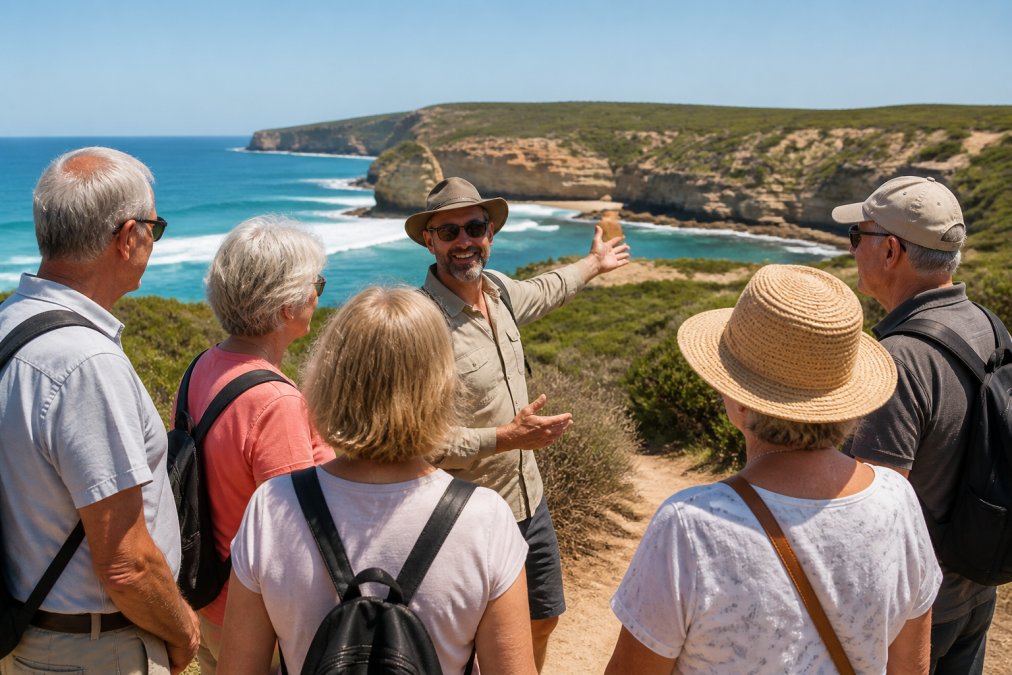
The Classic Route: Cairns to the Tip and Back
Most operators follow the same spine: north from Cairns through the Daintree and Cape Tribulation, across the peninsula to the Tip, then home via Cooktown. Our 9 and 14 day departures run this loop in both directions of travel, which matters more than it sounds, because the return leg through Cooktown and the Daintree feels like a second trip rather than a repeat.
Expect long driving days broken by creek crossings, rainforest tracks and the kind of scenery that does not photograph properly. The Tip itself, near Pajinka, is usually a half-day stop with time to walk the final stretch.
What's Included and What Isn't
Inclusions vary by operator, so read the fine print before you commit. On our departures, transport, guiding, camping logistics and most meals are handled. Personal travel insurance, alcohol and optional add-ons generally are not.
Ask two questions of any operator: who drives, and who sets up camp. If the answer to either is "you", it is a tag-along trip, not a guided one.
Cape York 4WD Tour Duration: How Many Days Do You Need?
Nine days is the practical minimum for a return Cairns-to-Tip trip; 14 days allows a slower pace with real rest days built in. Cape York 4WD tour duration is the single biggest factor in how comfortable the trip feels, because the distance does not change but the daily hours behind the windscreen do.
A compressed itinerary means 8 to 10 hours of driving most days. A longer one means 4 to 6, with afternoons free for walks, swimming holes and campfires.
For mature travellers, the longer option is almost always the better buy. You are paying for time, not distance.
Tag-Along vs Guided 4WD Tours: Which Suits You?
The difference is who carries the risk. On a tag-along trip you drive your own vehicle in a convoy, manage your own tyre pressures, and rely on the group for recovery. On a guided trip, a professional expedition leader drives, navigates and handles mechanical problems.
Tag-along suits confident off-road drivers who own a suitably equipped vehicle and enjoy the problem-solving. Guided suits everyone else, particularly anyone who wants to look out the window rather than at the track.
Best Time to Travel and Seasonal Track Conditions
The dry season, roughly May to October, is the only reliable window for Cape York travel. Outside it, creek crossings become genuinely dangerous and many tracks close outright. But 'dry season' is not one uniform block, and the month you choose changes the trip more than most operators admit.
A common pattern across the season looks like this:
- May to early June, the country is still green from the wet, waterholes are full, and some creek crossings remain higher than later in the season. Tracks are reopening but conditions can change week to week.
- Late June to August, the most reliable window. Crossings are typically at their lowest, the weather is cooler at night, and the full route is usually accessible. This is also when demand peaks, so departures fill earliest.
- September to October, hotter, dustier and drier. Water levels drop further, some smaller waterholes shrink, and daytime temperatures climb. Fewer crowds on the track, but less margin if the wet season arrives early.
Seasonal accessibility drives everything: national park permits, campground availability and road conditions all hinge on how late the wet season ran. Operators typically lock in departures for the middle of the dry season to reduce the risk of a washed-out crossing forcing a route change. A late wet season can push the opening of some tracks back by weeks, which is why a flexible operator will build at least one contingency day into the itinerary rather than promising a fixed route.
Book early. The window is short and the good departures fill. If you are travelling in the peak June to August period, the practical advice is to commit months in advance rather than weeks.
What to Pack for a Cape York 4WD Trip
Pack for heat, dust, humidity and insects, and pack less than you think. What to pack for a Cape York 4WD trip comes down to layers, sun protection and a head torch.
- Two pairs of closed walking shoes, one that can get wet
- Lightweight long sleeves and trousers for sun and insects
- A wide-brimmed hat, sunscreen and insect repellent
- Refillable water bottle, head torch, personal first aid
- A soft bag rather than a hard suitcase, for vehicle storage
Leave the formal wear at home. Nobody has ever needed it at a campground.
Vehicle Preparation and Daily Convoy Life
If you are driving your own vehicle, preparation starts months out, not the week before. A vehicle preparation checklist for Cape York should cover:
- Tyres, including a full-size spare, checked for age not just tread
- Suspension and underbody inspected by a specialist
- Recovery gear: rated snatch strap, shackles, shovel, compressor
- Dual battery or portable power for fridge and devices
- Spares: belts, hoses, fuses, tyre repair kit
- Serviced and fluids topped before departure
Daily convoy life settles into a rhythm: an early start, a mid-morning stop, lunch somewhere with shade, and camp set up well before dark. The leader sets the pace and calls the crossings. Passengers in our vehicles ride in front-facing seats, which sounds like a small detail until you have spent a day sideways in the back of a troop carrier.
Fitness, Comfort and Solo Traveller Logistics
Cape York does not demand peak fitness, but it does reward reasonable mobility. You should be able to walk uneven ground for an hour, get in and out of a high-clearance vehicle unaided, and manage a few steps in and out of a tent.
Solo travellers are common on small-group departures and usually end up sharing campfire stories rather than feeling like a spare part. Small group travel is the point: enough people for company, few enough that nobody gets lost in the crowd.
Where the route passes through country managed by Traditional Owners, follow your leader's guidance on access and photography. Wilderness first aid training among guides, permits arranged in advance and a leave-no-trace approach to camp sites are the marks of an operator worth travelling with.
Cape York rewards preparation more than almost any other trip on the map, and the logistics are where most people come unstuck. Curious Compass Collective handles the driving, the permits, the camp setup and the recovery gear, so the only thing left to manage is your own sense of wonder. Our thoughtfully paced itineraries, purpose-designed 4WD vehicles with front-facing seats, and small group sizes are built for travellers aged 35 and over who want the Tip without the strain. Get started with Curious Compass Collective and let the Cape York journey unfold around you.
Frequently Asked Questions
What is the best time of year for a guided 4WD tour to Cape York?
The dry season, roughly May to October, is when creek crossings are lowest and most unsealed tracks are open. Some national park camping areas and the Jardine River ferry operate on seasonal schedules, so confirm access dates before booking. Travellers on thoughtfully paced cape york guided 4wd tours often find August and September balance good track conditions with comfortable overnight temperatures.
Do guided 4WD tours provide front-facing seating in troop carriers?
Not all operators do, but it matters for comfort on long days. Ask specifically whether seats are front-facing and belted, and whether the vehicle is a real 4WD rather than a converted bus. Curious Compass Collective runs authentic 4WD sedans, dual cab utes and troop carriers with front-facing seats, which suits mature travellers who want to watch the landscape rather than sit sideways.
What is the difference between a tag-along tour and a fully guided 4WD expedition?
On a tag-along trip you drive your own 4WD and follow a lead vehicle, handling your own fuel, meals and recovery gear. On a guided expedition you travel as a passenger or in a convoy led by an expedition leader who manages navigation, creek crossings, permits and camp logistics. The tag-along vs guided 4WD tours choice usually comes down to whether you want to drive the track yourself or simply enjoy it.
How physically demanding are guided 4WD tours for travellers over 50?
Corrugated roads and long driving days are the main strain, not walking. Choose an itinerary with shorter daily distances, front-facing seats and accommodation that breaks up camping stretches. Travellers with knee or hip concerns should ask operators about vehicle step height and how much time is spent out of the vehicle, since a well-paced cape york guided 4wd tour can be comfortable without daily hiking.
Frequently asked questions
What is the best time of year for a guided 4WD tour to Cape York?
The dry season, roughly May to October, is when creek crossings are lowest and most unsealed tracks are open. Some national park camping areas and the Jardine River ferry operate on seasonal schedules, so confirm access dates before booking. Travellers on thoughtfully paced cape york guided 4wd tours often find August and September balance good track conditions with comfortable overnight temperatures.
Do guided 4WD tours provide front-facing seating in troop carriers?
Not all operators do, but it matters for comfort on long days. Ask specifically whether seats are front-facing and belted, and whether the vehicle is a real 4WD rather than a converted bus. Curious Compass Collective runs authentic 4WD sedans, dual cab utes and troop carriers with front-facing seats, which suits mature travellers who want to watch the landscape rather than sit sideways.
What is the difference between a tag-along tour and a fully guided 4WD expedition?
On a tag-along trip you drive your own 4WD and follow a lead vehicle, handling your own fuel, meals and recovery gear. On a guided expedition you travel as a passenger or in a convoy led by an expedition leader who manages navigation, creek crossings, permits and camp logistics. The tag-along vs guided 4WD tours choice usually comes down to whether you want to drive the track yourself or simply enjoy it.
How physically demanding are guided 4WD tours for travellers over 50?
Corrugated roads and long driving days are the main strain, not walking. Choose an itinerary with shorter daily distances, front-facing seats and accommodation that breaks up camping stretches. Travellers with knee or hip concerns should ask operators about vehicle step height and how much time is spent out of the vehicle, since a well-paced cape york guided 4wd tour can be comfortable without daily hiking.