
Table of Contents
- Why a Cape York Bucket List Trip Belongs on Your Radar
- Best Time to Visit Cape York: Seasons, Weather and Road Conditions
- How Long to Spend in Cape York: Itinerary Options from 9 to 21 Days
- Cape York Trip Preparation Checklist: 4WD, Gear and Permits
- The Old Telegraph Track and Other Must-Do Experiences
- Safety, Sustainability and Solo Travel on a Cape York Bucket List Trip
- Guided vs Self-Drive, Budget vs Luxury: Choosing Your Cape York Adventure
- Frequently Asked Questions
Last Updated: September 24, 2026
Why a Cape York Bucket List Trip Belongs on Your Radar
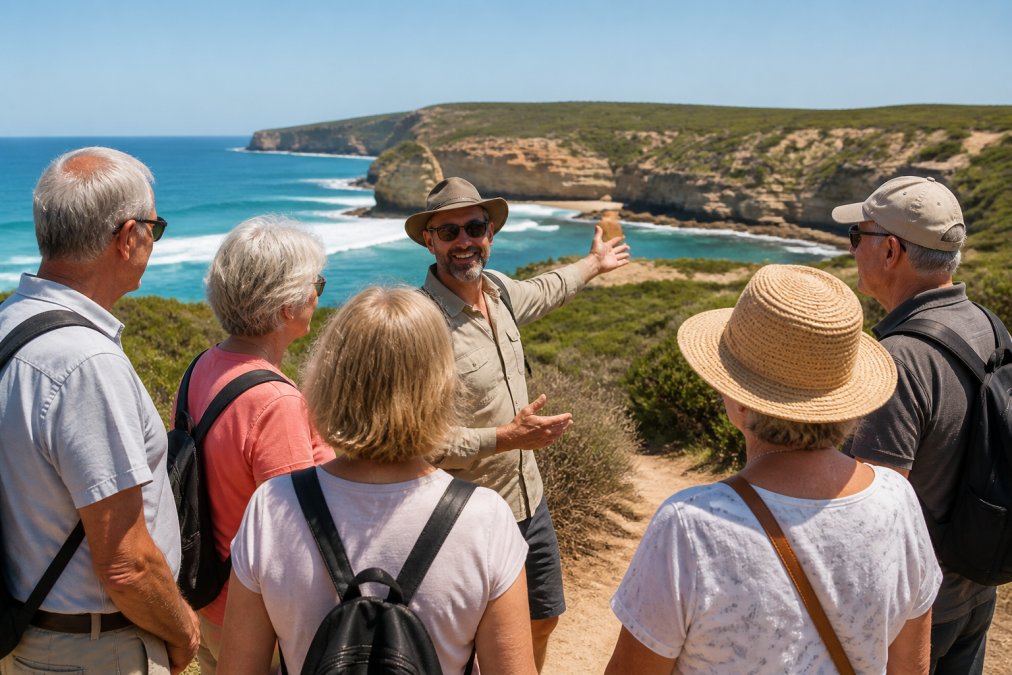
A cape york bucket list trip is the definitive off-road expedition in the country: a journey to the northernmost point of the continent, through remote wilderness, river crossings and landscapes that few people ever see. At Curious Compass Collective, we guide mature travellers along this route, and it remains an adventure guests describe as the trip of a lifetime to 'The Tip'.
Cape York is the northernmost peninsula of Queensland, a vast, sparsely populated region of savanna woodland, rainforest and unsealed roads that stretches from Cairns to the tip of Australia at Pajinka. Reaching it demands planning, preparation and respect for the environment.
Queensland Government parks and forests information confirms that many tracks cross national park and protected land, so permits and responsible behaviour are part of the deal.
Most travellers who dream of this journey worry about three things: when to go, how long to allow, and whether they are physically up to it. All three have clear answers, and none of them should stop you.
Best Time to Visit Cape York: Seasons, Weather and Road Conditions
The best time to visit Cape York is the dry season, from roughly May to October, when the unsealed roads are open and river crossings are manageable. Outside that window, the wet season brings flooding, closed tracks and genuine danger.
Timing matters more here than almost anywhere else in the country. The wet season, from November to April, turns many tracks into impassable mud and can leave communities cut off for weeks.
- Early dry season (May to June): lush green landscapes, fewer travellers, some creek crossings still high
- Peak dry season (July to August): the most reliable conditions, but the busiest period
- Late dry season (September to October): hot, dusty and increasingly dry, with corrugations at their worst
If you are weighing up the trade-offs, aim for late June or July. You get settled road conditions without the absolute crush of the peak school holiday weeks.
Bureau of Meteorology climate data is the most reliable source for checking rainfall patterns before you lock in dates.
How Long to Spend in Cape York: Itinerary Options from 9 to 21 Days
How long to spend in Cape York depends on how much you want to see and how hard you want to push. A rushed return trip from Cairns can be done in nine days, but a comfortable, unhurried experience needs two to three weeks. Most mature travellers underestimate the distances: the peninsula is long, the unsealed roads are slow, and fatigue is a genuine safety risk on a self-drive expedition.
Our Cape York Adventure - Lions Den to Elim Beach
Our Salty Life
The table below is a planning framework, not a rigid schedule. Treat the daily distances as ceilings rather than targets, on corrugated sections, average speeds of 40-60 km/h are realistic, and a 300 km day can take eight hours with stops.
| Trip Length | Best For | Pace | Typical Daily Driving | Key Stops |
|---|---|---|---|---|
| 9 days | Time-poor travellers | Fast | 300-400 km | Cairns, Cooktown, Laura, the Tip, return |
| 14 days | Balanced first-timers | Moderate | 200-300 km | Adds Daintree, Cape Tribulation, Bramwell Junction, Fruit Bat Falls |
| 21 days | Full immersion | Relaxed | 150-250 km | Adds extended bush camping, Weipa detour, Eliot Falls, rest days |
A workable 14-day shape (Cairns return) looks like this:
- Days 1-2: Cairns to Cooktown via the Daintree and Cape Tribulation, with an overnight at a coastal camp
- Day 3: Cooktown to Laura, a short leg that lets you visit the rock art sites and resupply
- Days 4-5: Laura to Bramwell Junction, then the northern section of the Old Telegraph Track or the bypass
- Days 6-7: Bramwell Junction to the Jardine River area, with a half-day at Fruit Bat Falls or Eliot Falls
- Day 8: The Jardine River crossing and on to Bamaga, then out to Pajinka at the Tip
- Days 9-10: Rest and explore around Bamaga, Seisia and the northern communities
- Days 11-14: Return south, ideally via a different route or with a Weipa detour to break up the driving
Why 14 days is the sweet spot. It gives you two rest days, which matters more than most people expect.
Bureau of Meteorology climate data is the most reliable source for checking rainfall patterns before you lock in dates, and road condition updates from the relevant Queensland authorities should be checked the week you depart.
Cape York Trip Preparation Checklist: 4WD, Gear and Permits
A cape york trip preparation checklist should cover three areas: your vehicle, your gear and your permits. Skipping any one of them is the most common way a dream trip turns into a breakdown or a fine.
Vehicle preparation:
- Service the 4WD well before departure and check the cooling system, brakes and suspension
- Fit recovery gear: a winch, snatch straps, recovery tracks and a long-handled shovel
- Carry two spare tyres and a tyre repair kit, and learn to adjust tyre pressure for corrugations
- Consider a snorkel if your vehicle will tackle deep water crossings
Gear and supplies:
- A satellite phone or emergency beacon, because mobile coverage disappears for long stretches
- A comprehensive first aid kit and enough water and fuel to cover the longest gap between supply points
- Bush camping equipment, because accommodation is limited and often booked out months ahead
Permits and access:
- Check national park permit requirements before you travel
- Confirm camping permits for any nights spent on protected land
- Carry a current first aid certificate if you are leading a group
The Old Telegraph Track and Other Must-Do Experiences
- Pajinka, the tip of Australia, where the two seas meet, a short walk from the car park, with cultural significance to the local Traditional Owners
- Fruit Bat Falls and Eliot Falls, twin swimming holes on the bypass route that offer relief from the dust and are accessible to most 4WDs
- The rock art sites around Laura, among the most significant in the country
- Historic towns and remote communities, Cooktown, Laura, Coen, Weipa and Bamaga, that tell the story of the region
- Wildlife encounters, from estuarine crocodiles to the extraordinary birdlife of the wetlands and the Jardine River area
Queensland Government parks and forests information outlines access rules and any current closures across the protected areas the track passes through.
Safety, Sustainability and Solo Travel on a Cape York Bucket List Trip
Safety on a Cape York bucket list trip comes down to preparation, communication and never travelling alone through remote sections. The wilderness is genuinely remote, and help can be days away.
For solo travellers, the protocols are non-negotiable:
- Never travel the remote tracks alone; join a tagalong group or a guided expedition
- File a detailed itinerary with someone reliable and check in at every opportunity
- Carry an emergency beacon and know how to use it
- Share your daily plans with your group and stick together at water crossings
Guided vs Self-Drive, Budget vs Luxury: Choosing Your Cape York Adventure
Choosing between guided and self-drive comes down to confidence, time and how much you want to handle yourself. Self-drive gives you total freedom but demands mechanical skill, navigation experience and constant decision-making. A guided expedition hands those pressures to someone else.
Frequently Asked Questions
Is a 4WD essential for a Cape York bucket list trip?
Yes, a high-clearance 4WD is essential for most Cape York routes, especially the Old Telegraph Track and unsealed roads north of Laura. These tracks involve deep ruts, corrugations, water crossings and soft sand that a standard vehicle cannot handle. If you do not own a suitable 4WD, joining a guided small-group tour with purpose-built vehicles removes the stress of vehicle preparation, recovery gear and mechanical breakdowns. Even on the Peninsula Developmental Road, conditions change quickly after rain, so low-range gearing and good tyres are strongly recommended.
What is the best month to visit Cape York?
The best time to visit Cape York is during the dry season from May to October. June, July and August offer the most reliable road conditions, cooler nights and minimal rainfall. May can still have some lingering wet-season closures, while September and October are hotter but less crowded. Avoid the wet season from November to April when many tracks, including the Old Telegraph Track, are closed or impassable. If you want the best balance of access and comfort, aim for June or July.
How many days do you need to properly explore Cape York?
Most travellers need at least 10 to 14 days to properly explore Cape York, allowing time for the return journey from Cairns. A 9-day trip can reach the Tip and return via Cooktown, but it is rushed. A 14-day itinerary lets you include the Old Telegraph Track, stop at places like Fruit Bat Falls and Twin Falls, and spend time in Lakefield National Park. If you want a slower pace with rest days, 21 days is ideal. Guided tours often offer 9 and 14-day options to match your timeframe.
What safety precautions should be taken when travelling to the Tip?
Safety on a Cape York trip starts with a satellite phone or personal locator beacon, as mobile coverage is unreliable. Carry a comprehensive first aid kit, extra water, fuel and spare parts. Check tide times before any beach driving and never cross a flooded causeway without walking it first. Travel with at least one other vehicle if self-driving, and let someone know your itinerary. On guided tours, your guide handles navigation, recovery and emergency communication, which reduces risk significantly for less experienced remote travellers.
Frequently asked questions
Is a 4WD essential for a Cape York bucket list trip?
Yes, a high-clearance 4WD is essential for most Cape York routes, especially the Old Telegraph Track and unsealed roads north of Laura. These tracks involve deep ruts, corrugations, water crossings and soft sand that a standard vehicle cannot handle. If you do not own a suitable 4WD, joining a guided small-group tour with purpose-built vehicles removes the stress of vehicle preparation, recovery gear and mechanical breakdowns. Even on the Peninsula Developmental Road, conditions change quickly after rain, so low-range gearing and good tyres are strongly recommended.
What is the best month to visit Cape York?
The best time to visit Cape York is during the dry season from May to October. June, July and August offer the most reliable road conditions, cooler nights and minimal rainfall. May can still have some lingering wet-season closures, while September and October are hotter but less crowded. Avoid the wet season from November to April when many tracks, including the Old Telegraph Track, are closed or impassable. If you want the best balance of access and comfort, aim for June or July.
How many days do you need to properly explore Cape York?
Most travellers need at least 10 to 14 days to properly explore Cape York, allowing time for the return journey from Cairns. A 9-day trip can reach the Tip and return via Cooktown, but it is rushed. A 14-day itinerary lets you include the Old Telegraph Track, stop at places like Fruit Bat Falls and Twin Falls, and spend time in Lakefield National Park. If you want a slower pace with rest days, 21 days is ideal. Guided tours often offer 9 and 14-day options to match your timeframe.
What safety precautions should be taken when travelling to the Tip?
Safety on a Cape York trip starts with a satellite phone or personal locator beacon, as mobile coverage is unreliable. Carry a comprehensive first aid kit, extra water, fuel and spare parts. Check tide times before any beach driving and never cross a flooded causeway without walking it first. Travel with at least one other vehicle if self-driving, and let someone know your itinerary. On guided tours, your guide handles navigation, recovery and emergency communication, which reduces risk significantly for less experienced remote travellers.