
Table of Contents
- What to Expect on a Cape York 7-Day Itinerary
- Best Time to Visit Cape York
- Cape York 4WD Preparation and Vehicle Essentials
- Day-by-Day Breakdown: Your 7-Day Cape York Route
- Days 1-2: Cairns to Cooktown via Daintree (approximately 280 km, 5-6 hours sealed road)
- Days 3-4: Cooktown to Bloomfield Track and the Peninsula (approximately 120 km, 6-8 hours 4WD track)
- Days 5-6: The Tip and Remote Wilderness Camping (approximately 80-100 km total, 8-10 hours driving across two days)
- Day 7: Return via Coastal Route and Seisia (approximately 120 km, 6-8 hours 4WD track)
- Cape York Guided Tours for Seniors and Mature Travellers
- Safety, Permits and Essential Logistics
- Frequently Asked Questions
Last Updated: September 30, 2026
What to Expect on a Cape York 7-Day Itinerary
A Cape York 7-day itinerary takes you through some of the most remote and spectacular wilderness in the country. You'll traverse 4WD tracks, camp under stars far from civilisation, and experience Indigenous culture in places most travellers never reach. This is adventure travel designed for people who want authenticity without abandoning comfort entirely.
Best Time to Visit Cape York
The best time to visit Cape York runs from May through September. This is the dry season, when tracks are passable and weather is predictable. Outside these months, monsoon rains turn the Peninsula into a mud trap, river crossings become dangerous, and some tracks close entirely.
Cape York 4WD Preparation and Vehicle Essentials
Your vehicle is your lifeline. Before leaving sealed road, it must be genuinely ready. Preparation differs significantly depending on your vehicle type and travel style.
Vehicle-Specific Preparation Checklists
For traditional 4WD (Toyota LandCruiser, Ford Ranger, Nissan Patrol):
- Tyres: All-terrain or mud-terrain, minimum 6mm tread. Carry a full-size spare, puncture repair kit, and tyre plugs
- Suspension: Check for leaks, worn bushings, and shock absorber function. Consider upgrades if over 150,000 km
- Engine: Fresh oil, coolant, and fuel filter. Carry 5 litres extra oil and 10 litres coolant
- Brakes: Pads and fluid in good condition; consider brake fluid upgrade for remote travel
- Battery: Healthy battery with jumper leads and portable jump-starter. Dual battery systems ideal for remote camping
- Water systems: Extra coolant and drinking water. Carry spare radiator hoses and jubilee clips
- Differential and transfer case: Check fluid levels and locking differential engagement
- Snorkel: Fitted snorkels reduce water ingestion during river crossings
For campervans and motorhomes:
- Chassis and suspension: Check suspension load ratings and tyre pressures for loaded weight
- Braking system: Test brakes on sealed road before remote sections
- Engine cooling: Carry extra coolant; consider secondary radiator if heavily loaded
- Habitation systems: Water tanks, grey-water systems, and waste tanks must be secure and leak-free
- Electrical systems: Dual battery systems essential; ensure solar panels are securely mounted
- Tyres: Load-rated tyres appropriate for laden weight
- Awnings and external fixtures: Secure all external equipment
For motorcycles and adventure bikes:
- Tyres: Dual-sport or adventure tyres with aggressive tread. Carry puncture repair kit, spare tube, and tyre levers
- Suspension: Check fork seals and shock absorber function
- Engine: Fresh oil and filter. Carry extra oil, spark plugs, and basic tool kit
- Brakes: Pads and fluid in excellent condition
- Fuel capacity: Consider auxiliary fuel containers for remote sections
- Protection: Engine guards, hand guards, and skid plates reduce damage
Universal Equipment for All Vehicle Types
- High-lift jack or portable winch rated for your vehicle weight
- Snatch straps rated for your vehicle weight
- Spade and shovel
- Extra fuel cans (jerry cans)
- Spare belts, hoses, and fuses
- Comprehensive tool kit: pliers, spanners, screwdrivers, adjustable wrench, Allen keys
- Spare battery terminals and jumper cables
- Spare radiator hose and jubilee clips
- Puncture repair kit and tyre plugs
Offline Navigation and Connectivity
Mobile coverage ends beyond Cooktown. Download offline maps using Maps.me or Gaia GPS, carry printed topographic maps (1:100,000 scale), and use GPS devices with pre-loaded Peninsula maps. Mark key waypoints: river crossings, campsites, water sources, and emergency shelter locations.
The Reality of Remote Breakdown
Most breakdowns result from underestimating corrugations, improper river crossing technique, or neglecting offline navigation. A well-prepared vehicle handles the Peninsula; an unprepared one incurs rescue bills of $3,000-$8,000.
Day-by-Day Breakdown: Your 7-Day Cape York Route
Days 1-2: Cairns to Cooktown via Daintree (approximately 280 km, 5-6 hours sealed road)
Day 1: Cairns to Cooktown
Leave Cairns early (6:00-7:00 AM) heading north through the Great Dividing Range toward Daintree via the Captain Cook Highway, a well-maintained sealed road with scenic pullouts.
Day 2: Cooktown acclimatisation and final preparation
Days 3-4: Cooktown to Bloomfield Track and the Peninsula (approximately 120 km, 6-8 hours 4WD track)
Day 3: Bloomfield Track to first wilderness camp
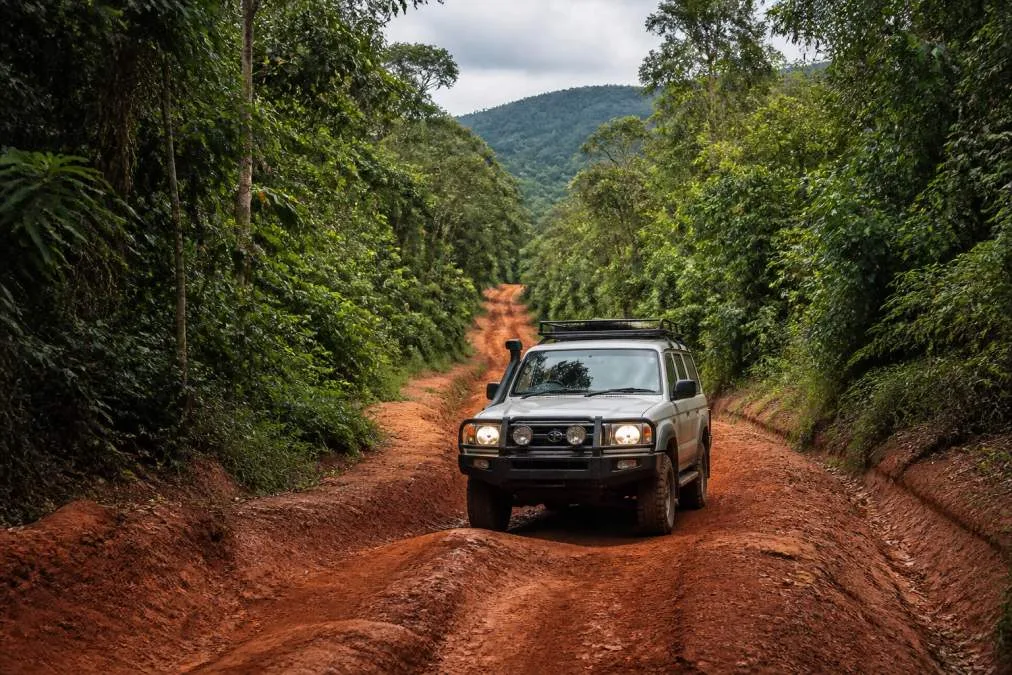
Leave Cooktown early (6:30-7:00 AM) toward the Bloomfield Track turnoff (approximately 35 km, 45 minutes). The Bloomfield Track is a rough 4WD route with red earth, dense vegetation, and creek crossings. Expect 1-1.5 km/hour on corrugated sections and 5-10 km/hour on smoother stretches.
Day 4: Remote wilderness driving and deeper penetration
Days 5-6: The Tip and Remote Wilderness Camping (approximately 80-100 km total, 8-10 hours driving across two days)
Days 5 and 6 take you to the northern tip of the Peninsula. The landscape shifts from tropical rainforest to open woodland.
Day 5: Approach to The Tip
Day 6: The Tip exploration and return preparation
Day 7: Return via Coastal Route and Seisia (approximately 120 km, 6-8 hours 4WD track)
Your final day loops back via an alternative route, avoiding retracing the Bloomfield Track. Return via Northern Peninsula coastal areas, Seisia township, and sealed road near Cooktown. By late afternoon, you're back on sealed road carrying stories most people never collect.
Cape York Guided Tours for Seniors and Mature Travellers
A Cape York 7-day itinerary is suitable for mature travellers when paced and guided correctly. The Pajinka Tour runs annually with intentionally small group sizes, supplying vehicles, camping equipment, meals, and expert guides.
Safety, Permits and Essential Logistics
Before you leave, understand the legal and practical requirements. The Peninsula isn't lawless, but it operates under different rules than suburban roads.
Permits and access:
- No formal permit is required for most of the Peninsula, but some Indigenous-managed areas require permission. Check with local Indigenous communities before camping on their Country
- Mobile coverage is non-existent beyond Cooktown. Satellite phones or personal locator beacons are sensible insurance for remote camping
- Inform someone on the coast where you're headed and when you expect to return
Vehicle registration and insurance:
- Your vehicle must be registered and roadworthy. Standard comprehensive insurance often excludes 4WD travel on unsealed tracks, check your policy before departure
- Consider additional adventure travel insurance that covers vehicle recovery and remote area evacuation
Health and medical:
- There's no medical facility between Cooktown and The Tip. Carry a comprehensive first aid kit and know how to use it
- If you're on regular medications, carry extra supplies. Resupply isn't possible
- Inform your guide of any medical conditions or allergies before the journey starts
Environmental responsibility:
- Carry all waste out. Leave no trace of your camp
- Respect Indigenous sites and sacred areas. Ask locals before photographing or entering
- Don't feed wildlife or remove plants
Frequently Asked Questions
Is a 7-day itinerary realistic for a Cape York road trip?
Yes, seven days allows you to experience the key highlights without rushing. You'll have time to drive the Bloomfield Track, reach The Tip, explore Cooktown, and camp in the wilderness. Guided tours typically follow this timeframe to balance remote travel with comfort and safety. Self-drive trips may need more time if you're unfamiliar with corrugations and river crossings, so factor in slower speeds on rough sections.
What is the best time to visit Cape York?
The dry season (May to October) is ideal for Cape York travel. Roads are most passable, rainfall is minimal, and tropical humidity is lower. The wet season (November to April) brings heavy rain, flooded river crossings, and track closures. Most organised tours operate during the dry season. If you're self-driving, avoid the wet season unless you have extensive 4WD experience and satellite communication.
What are the must-see attractions in Cape York?
The Tip (York Peninsula's northernmost point), Bloomfield Track, Cooktown's historic sites, Thursday Island, Seisia, and remote waterfalls are essential stops. Natural landmarks like the Great Dividing Range offer authentic insights. Guided tours typically include these highlights with expert storytelling about local history and landscape. Self-drive travellers should plan extra time at each location to absorb the remote wilderness experience.
What does Cape York 4WD preparation involve?
Essential preparation includes servicing your vehicle (brakes, suspension, tyres), carrying spare parts (belts, hoses, fuel filters), and packing recovery gear (snatch strap, shovel, high-lift jack). Check fuel range against remote distances between stations. Stock water, food, and first aid supplies. Ensure your tyres suit corrugated tracks and river crossings. Guided tours handle this; self-drive travellers should complete a pre-trip vehicle inspection and carry satellite communication devices for emergencies in areas without mobile coverage.
How do guided tours differ from self-drive Cape York trips?
Guided tours provide expert navigation, vehicle maintenance, camp setup, and cultural storytelling, ideal for mature travellers prioritising safety and comfort. Self-drive trips offer flexibility and independence but require navigation skills, vehicle expertise, and self-sufficiency in remote areas. Guided tours compress logistics into a seamless experience; self-drive requires detailed planning, permits, and contingency planning for breakdowns. Tour operators handle permits, track conditions, and emergency protocols.
What permits or permissions are needed for Cape York travel?
Check with relevant National Park authorities and Indigenous land councils before your trip. Some tracks cross Indigenous land requiring permission or permits. Camping permits may apply to certain areas. Guided tour operators handle these requirements as part of their itinerary planning. Self-drive travellers must research current permit requirements and obtain them in advance. Track conditions and closures change seasonally, so confirm access before departure.
How much fuel should I carry for a Cape York 7-day trip?
Fuel stations are sparse in remote areas; distances between towns can exceed 200 kilometres. Carry jerry cans and plan refuelling stops carefully. Your vehicle's fuel efficiency on corrugated tracks will be lower than highway driving. Guided tours plan fuel logistics; self-drive travellers should map fuel stations, calculate range based on rough-track consumption, and carry extra fuel. Satellite phones or communication devices are essential if you run low in wilderness areas.
What accommodation options exist for a Cape York itinerary?
Options range from bush camping (basic sites with minimal facilities) to caravan parks in towns like Cooktown and Seisia. Guided tours typically provide equipped camping with support vehicles and meals. Self-drive travellers can camp wild (where permitted) or use established parks. Accommodation is limited; book ahead in peak dry season. Comfort levels vary significantly, bush camping suits adventurous travellers; guided tours offer better facilities and expert camp management for mature travellers seeking rest between travel days.
Frequently asked questions
Is a 7-day itinerary realistic for a Cape York road trip?
Yes, seven days allows you to experience the key highlights without rushing. You'll have time to drive the Bloomfield Track, reach The Tip, explore Cooktown, and camp in the wilderness. Guided tours typically follow this timeframe to balance remote travel with comfort and safety. Self-drive trips may need more time if you're unfamiliar with corrugations and river crossings, so factor in slower speeds on rough sections.
What is the best time to visit Cape York?
The dry season (May to October) is ideal for Cape York travel. Roads are most passable, rainfall is minimal, and tropical humidity is lower. The wet season (November to April) brings heavy rain, flooded river crossings, and track closures. Most organised tours operate during the dry season. If you're self-driving, avoid the wet season unless you have extensive 4WD experience and satellite communication.
What are the must-see attractions in Cape York?
The Tip (York Peninsula's northernmost point), Bloomfield Track, Cooktown's historic sites, Thursday Island, Seisia, and remote waterfalls are essential stops. Natural landmarks like the Great Dividing Range offer authentic insights. Guided tours typically include these highlights with expert storytelling about local history and landscape. Self-drive travellers should plan extra time at each location to absorb the remote wilderness experience.
What does Cape York 4WD preparation involve?
Essential preparation includes servicing your vehicle (brakes, suspension, tyres), carrying spare parts (belts, hoses, fuel filters), and packing recovery gear (snatch strap, shovel, high-lift jack). Check fuel range against remote distances between stations. Stock water, food, and first aid supplies. Ensure your tyres suit corrugated tracks and river crossings. Guided tours handle this; self-drive travellers should complete a pre-trip vehicle inspection and carry satellite communication devices for emergencies in areas without mobile coverage.
How do guided tours differ from self-drive Cape York trips?
Guided tours provide expert navigation, vehicle maintenance, camp setup, and cultural storytelling—ideal for mature travellers prioritising safety and comfort. Self-drive trips offer flexibility and independence but require navigation skills, vehicle expertise, and self-sufficiency in remote areas. Guided tours compress logistics into a seamless experience; self-drive requires detailed planning, permits, and contingency planning for breakdowns. Tour operators handle permits, track conditions, and emergency protocols.
What permits or permissions are needed for Cape York travel?
Check with relevant National Park authorities and Indigenous land councils before your trip. Some tracks cross Indigenous land requiring permission or permits. Camping permits may apply to certain areas. Guided tour operators handle these requirements as part of their itinerary planning. Self-drive travellers must research current permit requirements and obtain them in advance. Track conditions and closures change seasonally, so confirm access before departure.
How much fuel should I carry for a Cape York 7-day trip?
Fuel stations are sparse in remote areas; distances between towns can exceed 200 kilometres. Carry jerry cans and plan refuelling stops carefully. Your vehicle's fuel efficiency on corrugated tracks will be lower than highway driving. Guided tours plan fuel logistics; self-drive travellers should map fuel stations, calculate range based on rough-track consumption, and carry extra fuel. Satellite phones or communication devices are essential if you run low in wilderness areas.
What accommodation options exist for a Cape York itinerary?
Options range from bush camping (basic sites with minimal facilities) to caravan parks in towns like Cooktown and Seisia. Guided tours typically provide equipped camping with support vehicles and meals. Self-drive travellers can camp wild (where permitted) or use established parks. Accommodation is limited; book ahead in peak dry season. Comfort levels vary significantly—bush camping suits adventurous travellers; guided tours offer better facilities and expert camp management for mature travellers seeking rest between travel days.